

Lay’s Mieng Kam Krob Ros Chips
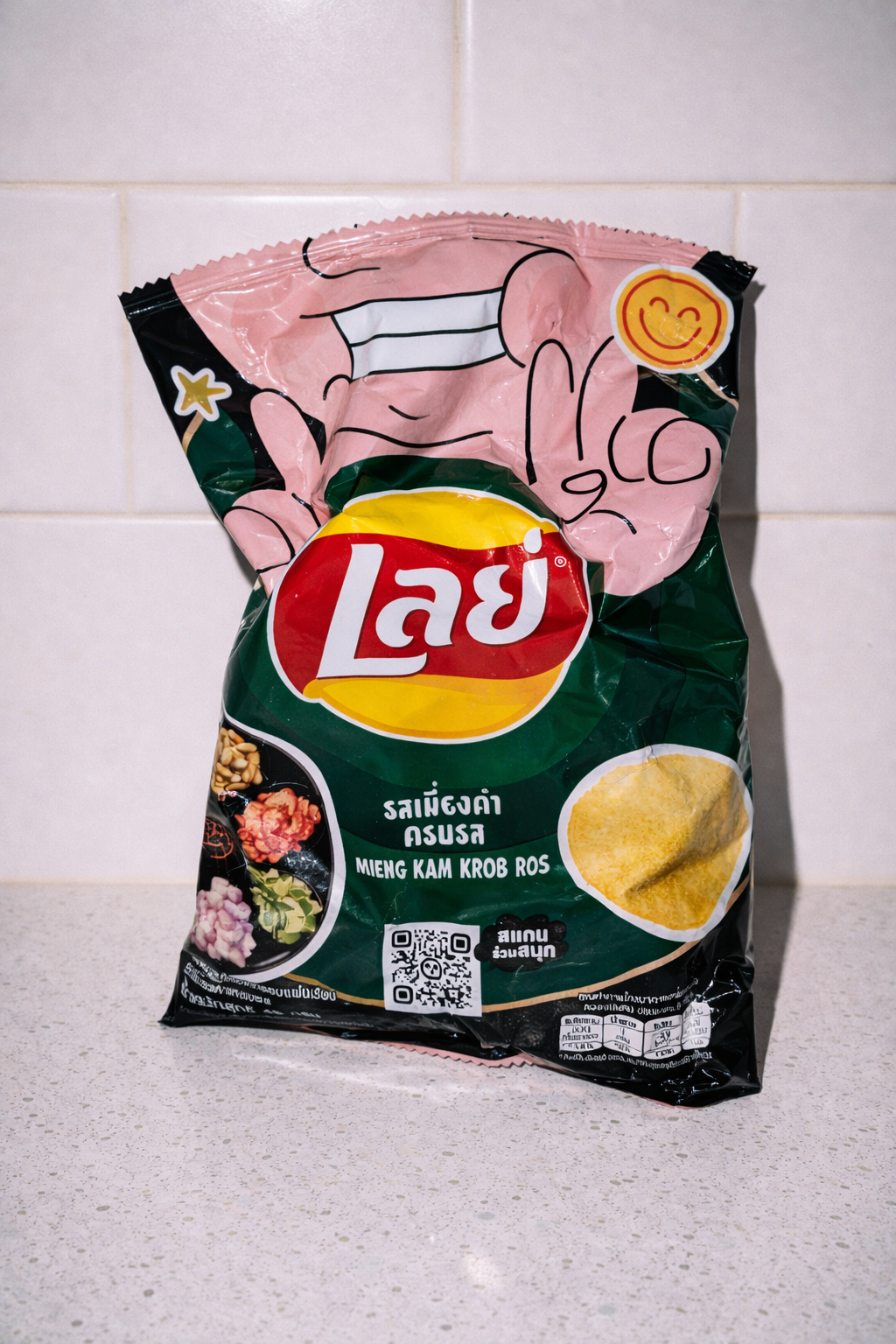
Lay’s Mieng Kam Krob Ros is sweet, sour, salty, bitter, shrimpy, herbal, spicy, funky, and crunchy.
The Snack
These are Lay’s Miang Kam Krob Ros, a Thailand-exclusive flavor that does what Lay’s Thailand does best: it skips vague, Western-friendly ideas of “Thai-inspired” and instead goes straight for an actual, beloved dish. In Thailand, Lay’s regularly releases flavors based on real foods (som tam, larb, tom yum, moo ping) and miang kam belongs in that same category. This isn’t novelty; it’s aimed at people who already know exactly what miang kam is supposed to taste like. You’ll usually find this flavor only in Thailand or through import snack shops and Asian grocery sites, which makes it feel less like a gimmick and more like a faithful translation of something deeply familiar.
Miang kam itself is not a single flavor but a whole edible ritual. Traditionally, you build it inside a wild betel leaf, which has a peppery, slightly medicinal bite of its own. Into that leaf go toasted coconut, peanuts, shallots, ginger, lime, chilies, and sometimes dried shrimp, all finished with a spoonful of thick, sweet-salty palm sugar sauce. You fold the leaf into a small bundle and eat it in one bite. The point isn’t harmony so much as collision: sweet, sour, salty, bitter, herbal, spicy, funky, crunchy, and rich all hitting at once. It’s the kind of snack you eat slowly while talking, assembling each leafful by hand, a mix of street food, party food, and palate cleanser.
That means the flavor Lay’s is trying to bottle here is unusually complex for a chip. Miang kam isn’t just “chili lime” or “sweet and spicy”; it’s sticky palm sugar sweetness, sharp citrus acidity, toasted nuttiness from coconut and peanuts, the aromatic heat of ginger and shallot, green herbal bitterness from the betel leaf, and sometimes a whisper of shrimp-funk underneath it all. Translating something that layered into powdered seasoning on a fried potato slice is, frankly, kind of unhinged, but that’s also what makes it exciting. Lay’s Thailand isn’t asking if this tastes vaguely Thai; it’s asking if it tastes like miang kam. And that confidence is what makes this flavor interesting before you even open the bag.
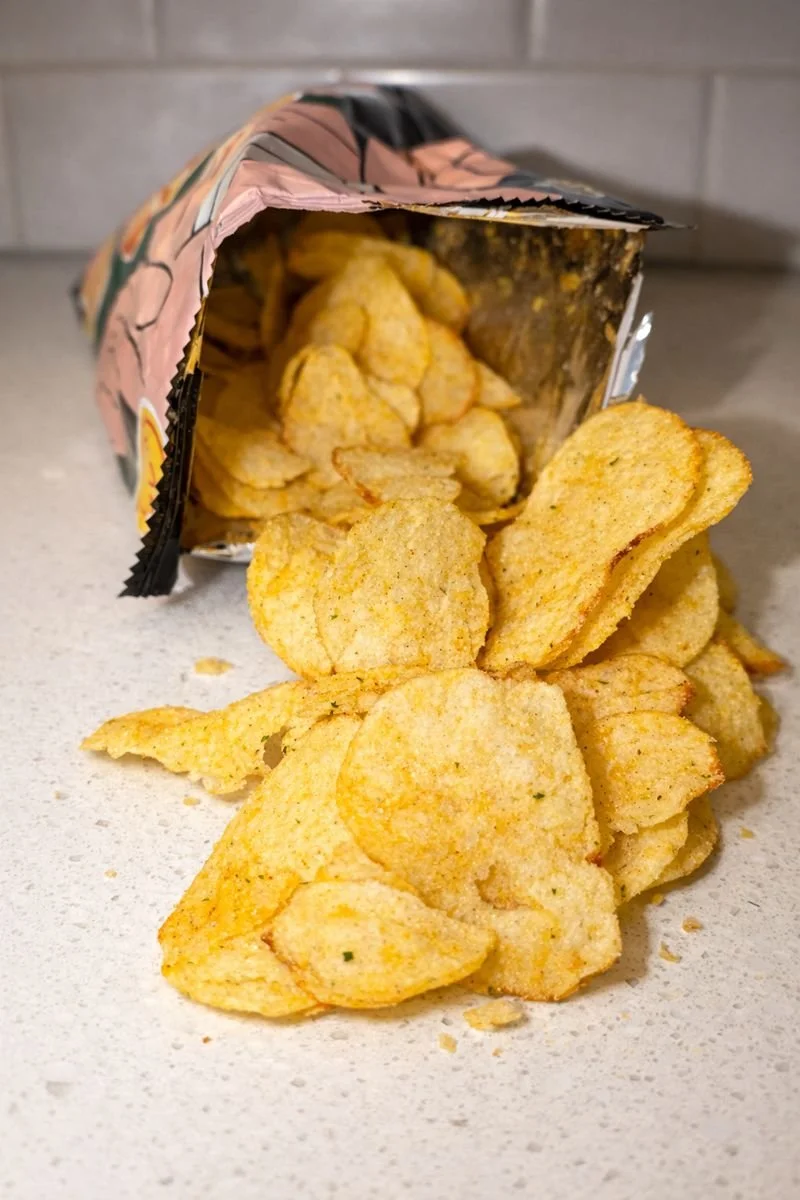
Behold the dried-seafood funk.
The Review
Once you start eating them, the first thing that hits is how loudly sweet and sour these chips are. The sweetness feels very specific, closer to palm sugar than to generic snack sugar, sticky and rounded, like the sauce in real miang kam. But almost immediately it’s cut by a bright, sharp sourness that reads as lime-forward, snapping the flavor back into something distinctly Thai rather than candy-like. That push and pull is what gives the chips their momentum: they don’t sit on the tongue so much as keep flipping between sweetness and citrusy bite.
Then comes the shrimp, and it’s unmistakable. This isn’t just background umami; it’s that familiar dried-seafood funk you get in a lot of Southeast Asian snacks (shrimp chips, fish sauce, bonito flakes) and it adds a savory depth that anchors all that sugar and acid. In the context of miang kam, it makes perfect sense: dried shrimp is often part of the real dish, and here it shows up as a slightly briny, almost fermented note that keeps the flavor from feeling flat or one-dimensional.
On the back end, there’s a whisper of heat. It doesn’t burn or build, but after a few chips you notice a gentle warmth lingering at the back of your throat, like the memory of fresh chilies rather than the punch of chili powder. It’s subtle enough that it never defines the chip, but it adds just enough edge to keep things from going soft.
What’s slightly missing is the herbal, green bitterness that comes from the betel leaf in real miang kam. That peppery, leafy note is hard to translate into seasoning powder, and Lay’s mostly lets it go, opting instead to focus on the more immediately recognizable flavors: sweet, sour, salty, and shrimp. Given how many competing elements miang kam has, that feels like a smart compromise. This is still a wildly ambitious flavor to compress into a potato chip, and the fact that it comes across as layered rather than muddled is kind of impressive.
The overall effect is weird in the best way: bright, sticky, sour, savory, and faintly funky, all at once. It doesn’t replicate the experience of folding a betel leaf around coconut, lime, and chilies, but it absolutely captures the spirit of miang kam, that chaotic, addictive collision of flavors that somehow keeps you reaching back into the bag.